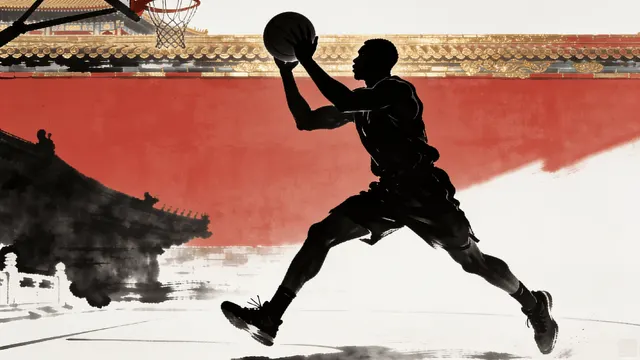
The Art of Offense: West’s Jumper and Court Vision
Jerry West's technical label was "elegant." In the physical 1960s NBA, his game looked like a carefully composed poem: a high, soft jump-shot arc, ghost-like off-ball movement, and wide passing vision. He did not bully defenders with strength; he dismantled them with brain and skill.
His jumper was the era's benchmark—high release, full extension, soft wrist, a near-identical arc that made timing impossible to read. West averaged 27.0 points for his career, a pure mid-range and drive artist who played entirely before the three-point line existed. He was also among the first guards to fold the fadeaway into his repertoire.
Even better was his passing. At 6-foot-2 he often ran the offense, averaging 6.7 assists for his career. He could read a trap in a blink and feed the cutter behind the defense. In the 1972 title run his assists often outpaced his scoring—proof he had evolved from a volume scorer into a floor general.
Worth noting: West was among the earliest NBA players to study film of himself, correcting tiny release flaws in the offseason. That professionalism mirrored his later executive rigor. Half his offensive art was talent; half was self-demanding discipline.
Related Reading
Related
The 2016 Cleveland Cavaliers: A Miracle After 1-3

Fifty Years Later: A Deep Dive Into the 2021 Championship

We The North: A Deep Dive Into the 2019 Championship