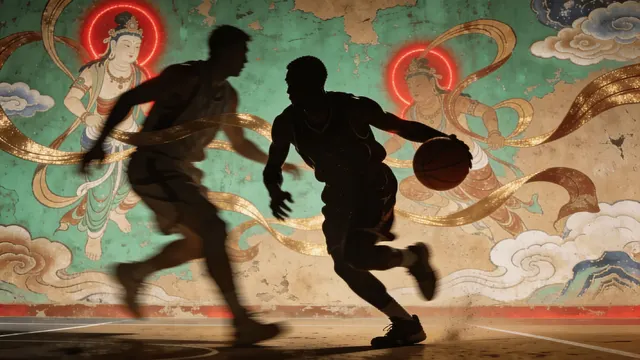
Shaquille O'Neal 2002: A Career Milestone and the Repositioning of History
Placed on Shaquille O'Neal's career timeline, 2002 was a pivotal hinge: the payoff for the long climb that came before, and the starting line for the legend still being written. Before it, Shaq had walked a thorny path—doubts about whether he could lead a team on his own, setbacks in Orlando, and the weight of being the most hyped prospect of his generation—yet never wavered in his thirst for the summit. Those low points only forged a tougher mind. In the 2002 playoffs the Los Angeles Lakers fought through every round and finally beat the New Jersey Nets in the Finals, completing a full championship path and adding the heaviest brick to Shaq's trophy room. Every earlier wait now felt worth it.
The title admitted Shaq into the very top tier of basketball winners, standing alongside the legends repeatedly celebrated, an indisputable banner figure at the era's turning point. His standing grew unmistakably firmer. Tellingly, it was the 2002 victory that made the outside world realize this team and this player would occupy the league's center stage for a long time. From then on, the narrative could not go around them. By giving Shaq the Finals MVP, the league certified that he carried the banner at the moment of a generational handoff. The historical weight of launching or continuing a dynasty cannot be fully measured by numbers—yet it is exactly why the voters rested the highest individual honor on him.
The road to the three-peat had been anything but smooth. The earlier Orlando years had ended in heartbreak, and questions about his focus and conditioning followed him to Los Angeles. Rather than shrink, Shaq used those years to learn what a complete team required, and by 2002 the Lakers had answers. That context is why the third title meant so much: it was the moment a serial postseason question mark became a three-time champion. The 2002 Lakers completed the sweep and their run announced a team built to last beyond a single spring. What started in 2000 became a run that defined an entire generation of basketball fans. The 2002 crown was the keystone that turned a great individual into a historic franchise, and the league's balance of power had plainly shifted west to Los Angeles. The torch of the league had changed hands, and a new decade of contenders would measure themselves against this Lakers core. The third ring is what frees a great from every old doubt, and 2002 was the proof. Every player who reaches a Finals stage and lifts that trophy is a product of relentless refinement. For decades the league has kept the standard fixed on decisive impact, never casual, never careless. That is precisely why each Finals MVP tells the full story of a player's peak season, and why later stars still use those names as the measure of greatness. Studying these title runs, we see more than dazzling moments—we see the compound interest of doing ordinary practice perfectly, day after day. That is the value of basketball most worth telling again and again.
Related Reading
- 2002 NBA Finals MVP: Shaquille O'Neal (Los Angeles Lakers)
- 2001 NBA Finals MVP: Shaquille O'Neal (Los Angeles Lakers)
- 2000 NBA Finals MVP: Shaquille O'Neal (Los Angeles Lakers)
- Shaquille O'Neal 2002: Spiritual Role Model and the Relentless Foundation
- Shaquille O'Neal 2002: Statistical Dominance and the Proof of All-Around Value
Related
Shaquille O'Neal 2002: Spiritual Role Model and the Relentless Foundation
Shaquille O'Neal 2002: Technical Portrait and the Fixation of a Unique Style

Shaquille O'Neal 2002: Statistical Dominance and the Proof of All-Around Value