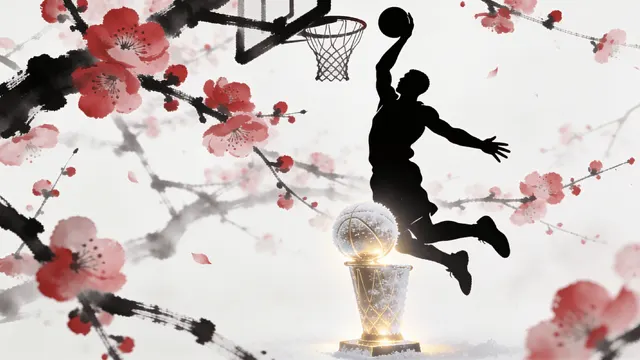
Shaquille O'Neal: Most Valuable and Legacy
Shaquille O'Neal won only one regular-season MVP in his career (2000), a fact often misread in later debates as "not enough honors." But separating the MVP from the Finals MVP is the very key to understanding his legend: the regular-season MVP came just once, because voting favors the rotation of narratives and stories; yet he took the Finals MVP three years running (2000, 2001, 2002). That three-peat of FMVPs is the true measure of his value—it proves that on the biggest stage, when the lights were brightest and the pressure purest, he never let anyone down.
The 2000 MVP was not an endpoint; it was the trigger of a dynasty. In that very same year, O'Neal led the Los Angeles Lakers to a three-peat (2000–2002), collecting all three Finals MVPs himself. In other words, the worth of that regular-season MVP lies not in its rarity, but in its being a "preview": the league was told that for the next three years, the paint would be defined by one man. This ability to stretch a single-year honor into an era's narrative is the broadest footnote to the phrase "Most Valuable"—most valuable is not merely being best on a certain day, but making victory a predictable, sustained order that opponents plan around for entire offseasons.
Viewed through basketball history, the scarcity of three-peat dynasties only sets off O'Neal's irreplaceability. That Lakers team had a young Kobe Bryant and Phil Jackson's triangle offense, but what made opponents "surrender half the game before tip-off" was O'Neal's absolute presence in the paint. Entire defensive systems were rebuilt to contain him; opponents' minds cracked a layer just facing him. A center becoming the axis of a dynasty, before the small-ball era, was the most classical and most extreme form basketball could take, and it has not been repeated since in quite the same way.
The distinction between one MVP and three FMVPs also reframes how we judge value itself. Regular-season voting rewards novelty and narrative arcs; a dominant big man repeating his case year after year simply stops being "the story." But the Finals stage strips narrative away and asks one question: who won when it mattered? O'Neal answered that question three times in a row. His legacy therefore resists the cheap critique of "only one MVP," because the honors he did accumulate sit exactly where basketball's truth is most concentrated—at the end of June, with the trophy on the line.
It is worth saying plainly what the numbers imply. A three-peat of Finals MVPs places O'Neal alongside the shortest list in league history, a club where volume scoring matters less than unavoidable presence. He did not win those awards by out-shooting everyone from distance; he won them by being the one problem no opponent could solve, game after game, series after series. Value, in its truest sense, is the thing you cannot plan around—and for three straight Junes, that thing wore number 34 in purple and gold.
So when we talk of "most valuable," we need not fixate on his single regular-season MVP. The real legend is the three-peat fire lit by that 2000 trophy, the proof of dominance stacked by three FMVPs, a name that became a synonym for "cannot be dissolved by tactics." What O'Neal left behind is not just glory, but an echo of a basketball philosophy that still shapes how centers are built today: when one man turns the paint into his kingdom, the Most Valuable Player becomes the synonym of the most dominant era, and a single season's award grows into a decade's worth of memory.
Related Reading
- Shaquille O'Neal: Glory and Idol— When the Strongest Giant Became the Most Likable Symbol
- Shaquille O'Neal: Hard Work and Role Model— The Weight of a Giant, Carried by Himself
- 2000 NBA MVP: Shaquille O'Neal (Los Angeles Lakers)
- 2001 NBA Finals MVP: Shaquille O'Neal (Los Angeles Lakers)
- 2002 NBA Finals MVP: Shaquille O'Neal (Los Angeles Lakers)
Related
2000 NBA MVP: Shaquille O'Neal (Los Angeles Lakers)

Shaquille O'Neal: Hard Work and Role Model— The Weight of a Giant, Carried by Himself
Shaquille O'Neal: Glory and Idol— When the Strongest Giant Became the Most Likable Symbol